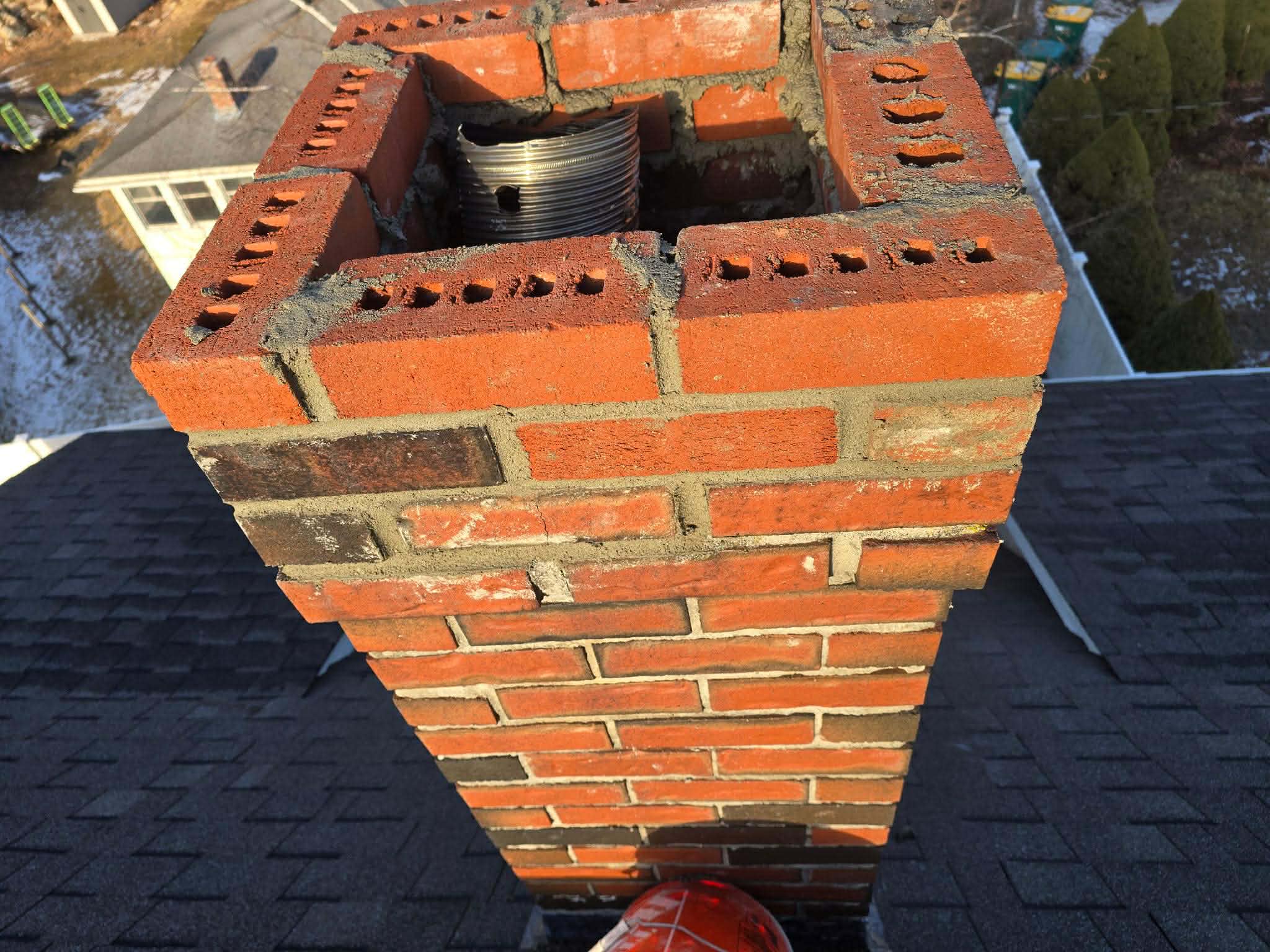
Massachusetts winters are particularly brutal on masonry chimneys. The combination of precipitation, temperature swings, and freeze-thaw cycles creates conditions that destroy unprotected chimneys over time. Here's why waterproofing is essential for New England homes.
Understanding Freeze-Thaw Damage
Brick and mortar are porous materials that absorb water. In New England's climate, this water doesn't just evaporate—it freezes. When water freezes, it expands by approximately 9%. This expansion creates pressure inside the masonry, causing microscopic cracks. Each freeze-thaw cycle (and we get dozens per winter) expands these cracks further.
Over time, this process causes: - Spalling (brick faces popping off) - Crumbling mortar joints - Cracked or damaged chimney crowns - Structural deterioration
Why New England Is Especially Tough
Our climate is particularly damaging because:
**Temperature fluctuations**: We regularly cycle above and below freezing, sometimes multiple times per day during shoulder seasons.
**Precipitation**: Snow, ice, and rain repeatedly wet masonry surfaces throughout winter.
**Humidity**: Coastal areas add salt air that accelerates deterioration.
**Chimney exposure**: Chimneys are exposed on all sides with no protection from a roof overhang.
How Waterproofing Works
Professional chimney waterproofing uses vapor-permeable sealants that prevent water from entering the masonry while allowing moisture already inside to escape. This is critical—non-breathable sealants trap moisture inside, actually accelerating damage.
Quality waterproofing: - Penetrates the masonry surface - Forms an invisible barrier against water - Allows vapor transmission from inside out - Doesn't change the chimney's appearance - Lasts 5-10 years depending on exposure
When to Waterproof
The ideal time is: - After repairs are complete (new tuckpointing must cure first) - During dry weather when masonry can dry before sealing - Before winter freeze-thaw cycles begin
Fall is perfect for waterproofing, though it can be done whenever conditions allow.
Signs Your Chimney Needs Protection
- White staining (efflorescence) on bricks
- Damp patches on interior walls near chimney
- Visible brick deterioration
- Crumbling mortar
- Water in firebox after rain
Elite Chimney provides professional waterproofing services throughout Greater Boston. Call (857) 247-5094 to protect your chimney before winter.
Need Chimney Service?
Our CSIA certified technicians are ready to help with inspections, cleaning, and repairs.
Call (857) 247-5094